
The Definitive Guide to Cover-Up Tattoos at Ink du Soleil
A tattoo is often intended to be a permanent marker of a moment, a person, or a belief. However, as we grow and our life stories evolve, the ink we once wore with pride may no longer resonate with our current selves. Whether it is an outdated design, a poorly executed piece from the past, or a reminder of a chapter you’ve closed, you are not obligated to live with a tattoo that no longer fits your aesthetic.
The Technical Process: How We Camouflage Your Past
A cover-up is vastly more complex than starting on a blank patch of skin. Because tattoo ink is translucent, it does not sit on top of the skin like paint; instead, it lives within the dermis and blends with existing pigments. Here is the meticulous process our experts at Ink du Soleil follow to ensure a successful Cover Up Old Tattoo Maple Ridge.
1. The Expert Evaluation and Consultation
The journey begins with a deep-dive assessment. During your consultation, we examine the “saturation” (the density of the old ink), the presence of any raised scar tissue, and the overall “flow” of the original piece. If a tattoo is extremely dark or heavily scarred, we may discuss a few sessions of laser lightening to “pop” the ink, creating a much better canvas for the new art.
2. Strategic Mapping and Custom Composition
In a cover-up, the new design must be “tailor-made” to the old shapes. We don’t typically use standard stencils; instead, our artists often “freehand” the initial structure directly onto your skin with specialized markers. This allows us to ensure that the darkest and most detailed parts of the new art fall directly over the most prominent parts of the old tattoo, effectively “tricking” the eye into seeing only the new masterpiece.
3. The Power of Advanced Color Theory
You cannot effectively hide black ink with light colors like yellow or white. Our artists utilize “neutralizing” tones—deep blues, magentas, forest greens, and saturated blacks—to mask the old design. We also use the “distraction method,” placing high-contrast highlights and intricate textures in areas away from the old tattoo’s lines. This ensures the eye is drawn to the new beauty rather than searching for what is hidden beneath.
4. The Layering and Finalization Phase
High-quality cover-ups often require more “packing” of ink than a standard tattoo. We typically recommend a multi-session approach. This allows the first layer of camouflage to settle and heal before we return to add the fine details, highlights, and finishing touches that finalize the transformation. This layering prevents the old design from “ghosting” back through as the skin settles.
The Advantages of Choosing a Cover-Up
Choosing to Cover Up Old Tattoo Maple Ridge at Ink du Soleil offers several life-changing benefits:
- Emotional Liberation: For many, an unwanted tattoo is a source of anxiety. Replacing it with a piece of art you love provides a profound sense of closure and renewal. It is a way to reclaim your body and your identity.
- Cost and Time Efficiency: While laser removal is an option, it can take years and thousands of dollars to achieve a “blank” state. A cover-up provides an immediate aesthetic upgrade in a fraction of the time.
- Creative Evolution: A cover-up is a creative opportunity to work with a high-level artist to turn a “negative” space on your body into a stunning piece of fine art that reflects your current tastes.
- Restored Confidence: No more hiding your skin under clothing or bandages. A successful cover-up restores your freedom to wear what you want, when you want, with total pride.
The Disadvantages and Challenges to Consider
It is important to have realistic expectations when looking for the Best Cover Up Tattoo Artist Near Me:
- Increased Size: A cover-up almost always needs to be larger than the original tattoo—usually two to three times larger—to provide enough “clean” skin to make the new design look natural and flow with your body.
- Darker Palettes: You will have fewer choices regarding color. Light, airy designs or soft pastels are rarely an option when covering dark, old ink. You must be open to darker, more saturated tones.
- The “Double Ink” Factor: Because we are layering ink over ink, the skin may become saturated more quickly. The healing process can be slightly more intense, and the area may feel a bit more “raised” or textured initially.
- Darker Final Result: By necessity, cover-ups are darker than the original piece. If you were hoping for a very light, delicate tattoo, a cover-up may not be the right path without prior laser lightening.
Why Trust Ink du Soleil with Your Transformation?
When searching for a
Frequently Asked Questions (FAQs)
Most tattoos can be improved or significantly changed, but not every design can be 100% hidden without some laser lightening first. If your tattoo is heavily saturated or solid black, we may recommend a few laser sessions before starting your Cover Up Tattoo Maple Ridge project to ensure a vibrant result.
The sensation is similar to a regular tattoo, though if there is existing scar tissue from the previous artist, the area may feel slightly more sensitive. We use modern equipment and techniques to minimize skin trauma and maximize your comfort.
This is known as "ghosting," and it usually happens when a cover-up is poorly executed. At Ink du Soleil, we use specific layering, color theory, and deep-saturation techniques to ensure your Cover Up Old Tattoo Maple Ridge remains hidden for the long term.
Cover-ups are generally more expensive than fresh tattoos because they require significantly more planning, technical skill, and extra ink saturation. We provide transparent, custom quotes during our consultation phase.
No. White ink is translucent, not opaque. It may look okay for a few weeks, but as the skin heals, the black ink underneath will turn it a muddy grey. We use proven color-neutralizing techniques rather than relying on white ink alone.
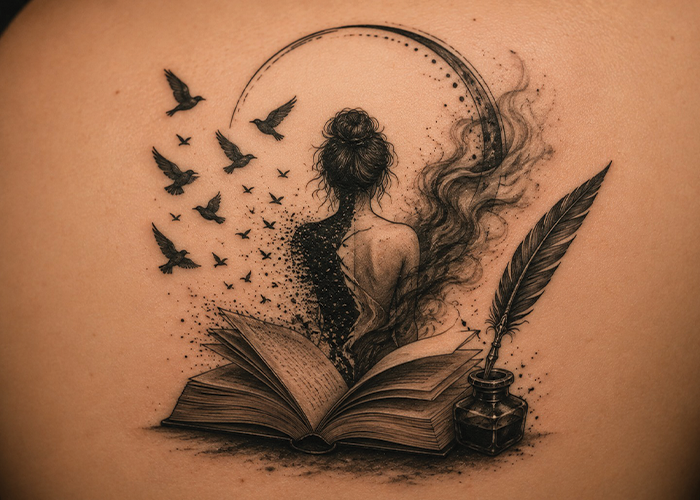
Rewrite Your Story: Book Your Transformation
Your past doesn't have to be your permanent—Turn your ink regret into an artful rebirth at Ink du Soleil.