
Unlock Your Inner Tattooing Masterpiece
Have you ever looked at a stunning piece of body art and felt a pull toward the machine? Do you find yourself sketching designs and wondering how they would translate onto a living canvas? Turning your artistic passion into a professional career is a bold and rewarding journey, but it requires more than just talent—it requires a foundation of precision, safety, and technical mastery.
The Advantages of a Career in Tattooing
Choosing to Learn To Tattoo BC through a professional program offers several life-changing benefits:
- Artistic Autonomy: Tattooing allows you to earn a significant living through your unique creative voice. You aren’t just an employee; you are a creator.
- Career Independence: Most professional artists enjoy the freedom of setting their own schedules and eventually managing their own creative brand.
- A Portable Trade: The skills you gain in a Tattoo Course Maple Ridge are global. A well-trained artist can find opportunities in elite studios anywhere in the world.
- Profound Connection: You have the unique opportunity to create art that marks the most significant moments in your clients’ lives, providing a sense of fulfillment few other jobs can offer.
The Realities: Disadvantages and Challenges
While the lifestyle is attractive, it is important for prospective students to be realistic about the demands of the profession:
- Physical Strain: Artists spend long hours hunched over in awkward positions. This can lead to chronic back, neck, and wrist issues if ergonomics are not prioritized.
- High Pressure: Unlike drawing on paper, there is no “undo” button. The mental stress of working on a permanent, living canvas can be intense for beginners.
- Steep Learning Curve: Mastery does not happen overnight. It requires hundreds of hours of practice on synthetic materials before transitioning to human skin.
- Initial Investment: High-quality machines, medical supplies, and pigments are a significant financial commitment for those starting their professional kits.
Phase 1: Foundations of Artistry & Safety Protocols
At Ink du Soleil, client and artist safety is non-negotiable. This first module of our Tattoo Course Maple Ridge establishes a comprehensive understanding of both the artistic and critical safety aspects of the industry.
- History & Industry Overview: Delve into the rich cultural history of tattooing and gain an understanding of the contemporary landscape, including current trends and employment opportunities.
- Anatomy & Skin Science: We provide a detailed exploration of the skin’s layers. Understanding how different skin types react to pigment and the biological science of the healing process is crucial for long-term art quality.
- Sterilization & Hygiene: This is the cornerstone of our training. You will master strict adherence to OSHA and CDC guidelines, learn meticulous cross-contamination prevention, and understand proper equipment maintenance.
- Bloodborne Pathogens Certification: An essential and mandatory component, ensuring every apprentice is certified in prevention—a critical step for safe and ethical tattooing.
- Client Consultation & Health Assessment: Learn how to engage with clients, grasp their vision, and perform health evaluations to identify potential risks or contraindications before work begins.
- Equipment Mastery: Get intimately familiar with various machines (coil and rotary), understand different needle configurations (liners, shaders, magnums), and learn about safe pigment usage.
Phase 2: Design, Technique & Practical Application
This module transitions from theory to hands-on mastery. Our Tattoo Artist Training Maple Ridge places great importance on prolonged, supervised practice to ensure muscle memory is built correctly.
- Drawing & Design Principles: Develop a strong artistic foundation with instruction on line work, shading, composition, and perspective specifically tailored for skin. Learn how to adapt original concepts into “tattooable” designs and master stenciling techniques for accurate transfer.
- Technical Application: This is where you apply your knowledge. You will learn to achieve crisp line work, execute various shading techniques (smooth gradients, whip shading, stippling), and perform vibrant color packing. Extensive practice on high-quality artificial skin allows you to develop precise machine control.
- Client Interaction & Professionalism: Develop ethical pricing and quoting strategies while building a professional portfolio. We emphasize professional conduct and building lasting client trust—core values at Ink du Soleil.
- Supervised Practical Sessions: Under the direct guidance of our expert instructors, you will progressively move from practice skins to supervised work on live models. This invaluable hands-on experience in a real-world setting is the ultimate step in our Tattoo Course Maple Ridge.
Why Choose Ink du Soleil?
We believe in building excellence from the ground up. Our instructors are professional artists dedicated to helping you progress, bringing real-world expertise to every lesson. We pride ourselves on maintaining small class sizes, ensuring personalized attention and ample one-on-one guidance. Our cutting-edge facility is designed to simulate a professional studio, preparing you for the demands of a high-end workplace from day one.
Frequently Asked Questions (FAQs)
We offer comprehensive Learn To Tattoo BC training that covers fundamentals, machine handling, hygiene, stencil application, skin preparation, and advanced shading techniques. Students receive hands-on guidance from industry veterans.
No. We welcome complete beginners as well as aspiring artists looking to refine their skills. Our Tattoo Artist Training Maple Ridge is designed to build confidence and technique from the ground up.
Yes. Students begin by practicing on synthetic skin. Once they have demonstrated technical proficiency and a mastery of safety protocols, they progress to supervised tattooing sessions on live models.
The timeframe depends on your dedication and learning pace. Our Tattoo Course Maple Ridge provides the structured mentorship needed to significantly accelerate your development compared to a traditional, unstructured apprenticeship.
Graduates can pursue careers as professional tattoo artists, studio assistants, or eventually open their own licensed studios after gaining enough field experience.
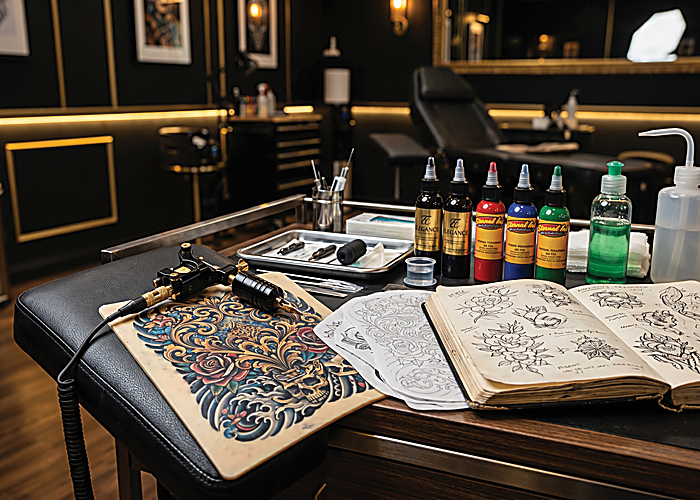
Unleash Your Art: Master the Canvas Within.
The skin awaits your touch, where every stroke tells a story—Begin mastering your craft with Ink du Soleil's training program.